Value Stream Mapping Consulting in India
Value Stream Mapping (VSM) is a Lean management method used to visualize the complete flow of materials, information, and activities involved in delivering a product or service. It helps manufacturers identify value-added and non-value-added activities, bottlenecks, waiting time, excess inventory, rework, and process delays. D&V Business Consulting uses VSM to help manufacturing businesses understand their current-state process and identify practical opportunities for improving flow, productivity, and operational performance.
Most organizations believe their processes are “fine.” But when you peel back the layers, you find bottlenecks, idle time, unnecessary approvals, duplicated efforts, and rework that’s eating into profits every single day. This is the silent chaos that leaders underestimate - until numbers start slipping. With strategic Value Stream Mapping consulting, these hidden inefficiencies stop being invisible and start being fixable.
Our approach is blunt, data-driven, and outcome-focused. We don’t believe in cosmetic improvements or boardroom-friendly presentations that never transform the shop floor. Our Value Stream Mapping Services dig deep into your operational reality - not what managers think is happening, but what is actually happening. We track every step, every wait, every constraint, and every recurring problem choking your throughput.
This is where our experience becomes your competitive advantage. We bring cross-industry insights and proven Lean methodologies that expose the weak links in your value delivery chain. When you work with our team, you don’t get generic advice - ou get actionable intelligence and a brutal clarity that accelerates decision-making.
Through our rigorous Value Stream Mapping (VSM) Consulting Services, we walk you through every inefficiency, quantify the impact, and provide a prioritized execution roadmap. The outcome? Faster workflows, reduced waste, smoother handoffs, higher customer satisfaction, and processes that scale without chaos. If your goal is operational excellence, there’s no shortcut — you need clear visibility, disciplined execution, and a partner who won’t sugarcoat your gaps.
This is the difference between companies that grow sustainably and those that burn cash while blaming market conditions. VSM is not a tool; it’s a strategic lens that rewires how your business performs. And if you genuinely want breakthrough performance, this is where the transformation starts.
Most manufacturing businesses do not have a visibility problem; they have a process-flow problem. Production delays, excess work-in-progress, long changeover times, quality issues, unnecessary movement, waiting, repeated approvals, and poor coordination between departments can remain hidden inside day-to-day operations. Value Stream Mapping Implementation helps management see the complete flow of material and information from customer demand through production and delivery, making operational constraints easier to identify, measure, and address.
At D&V Business Consulting, our VSM Implementation Services are designed to move beyond creating a current-state map. We combine shop-floor observation, process data, employee inputs, production records, cycle-time analysis, inventory information, quality data, and management priorities to understand how work actually moves through the organization. This practical approach to Value Stream Mapping for Manufacturing helps identify bottlenecks, non-value-added activities, process variation, information gaps, excess inventory, waiting time, rework, and constraints affecting customer delivery.
Our Value Stream Mapping Implementation Consultant works with business leaders, production teams, quality professionals, maintenance teams, supervisors, and shop-floor employees to establish a fact-based view of the existing process. Instead of relying only on assumptions or management reports, Manufacturing Value Stream Mapping examines the actual flow across processes. This may include production lead time, process cycle time, changeover time, uptime, first-pass yield, work-in-progress, queue time, manpower involvement, material movement, and information flow.
The purpose of VSM Implementation is not simply to produce a visually attractive map. The map becomes a management tool for deciding what should change, why it should change, who should own the improvement, and how progress should be measured. Based on the current-state findings, we develop a practical VSM Action Plan that converts identified gaps into defined improvement initiatives, responsibilities, priorities, timelines, and measurable outcomes.
A well-structured VSM Implementation Roadmap connects the current state with a realistic future state. Rather than recommending numerous disconnected projects, we prioritize improvements according to business impact, operational feasibility, customer requirements, available resources, and implementation dependencies. The resulting Value Stream Improvement Plan can address issues such as excessive WIP, poor production sequencing, long changeovers, quality losses, material shortages, bottlenecks, unbalanced workloads, unnecessary movement, and delayed information flow.
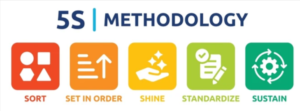
The Future State Implementation stage is where many VSM initiatives either create measurable improvement or remain limited to documentation. We help organizations translate the future-state vision into practical shop-floor actions. Depending on the identified constraints, implementation may involve line balancing, standard work, 5S, visual management, Kanban, pull systems, SMED, TPM, quality-at-source practices, layout improvements, workload redistribution, SOP improvement, production planning changes, or targeted automation.
Where continuous improvement opportunities are identified, VSM Kaizen Implementation can be used to address specific sources of waste through focused improvement activities. The objective is to connect Kaizen activity with the broader value stream rather than treating individual improvements as isolated projects. This creates a more disciplined approach to Value Stream Improvement Consulting, where improvement priorities are linked to measurable operational requirements.
Value Stream Mapping is a core Lean tool that visualizes the entire production process – from raw materials to customer delivery – highlighting value-adding and non-value-adding activities. It helps identify waste (e.g., overproduction, waiting, defects) to streamline flow and boost efficiency.
VSM is a visual tool that maps every step in your product or service delivery – from raw material to customer handoff. It separates value-added activities (things the customer is willing to pay for) from non-value-added ones (waiting, rework, overproduction). This clarity is the foundation of Lean.
But VSM isn’t just for factories. From software development to healthcare to financial services, process mapping for businesses reveals inefficiencies that erode profitability and customer satisfaction.
The best way to map business processes is through collaborative, cross-functional workshops led by End-to-end process mapping experts. This ensures buy-in, accuracy, and relevance. At D&V Business Consulting, we guide you through how to analyze workflow step by step, turning complexity into clarity.
How D&V Business Consulting Delivers Impact
We begin by listening. Every engagement starts with understanding your pain points: Is it long lead times? High defect rates? Poor capacity utilization? Our team then conducts a thorough business workflow assessment to diagnose root causes – not symptoms.
Using proven tools to identify process inefficiencies – including spaghetti diagrams, time-value charts, and takt time analysis—we create a fact-based current state map. From there, we co-design your future state value stream, prioritizing quick wins and strategic initiatives.
Our Lean process improvement consulting doesn’t stop at the whiteboard. We stay with you through implementation, providing:
- Workflow optimization consulting to redesign layouts and handoffs
- Factory layout and workflow optimization for physical operations
- Process automation assessment to identify digital opportunities
- Operational cost reduction strategies that protect quality and safety
For SMEs, we offer lean improvement consulting for SMEs – scaled to your resources and maturity level. For large enterprises, we deploy cross-functional teams for manufacturing process optimization services spanning multiple sites.
And because sustainability matters, we embed process standardization services and train your internal champions, ensuring improvements last long after our engagement ends.
Many organizations attempt Value Stream Mapping internally, only to hit roadblocks: unclear scope, lack of cross-functional alignment, or inability to convert insights into action. A seasoned Value Stream Mapping (VSM) Consulting Services provider brings objectivity, experience, and proven frameworks to ensure your initiative delivers measurable ROI—not just another report gathering dust.
A qualified VSM consultant:
Facilitates unbiased end-to-end process analysis across departments
- Identifies non-value-added activities that internal teams may overlook
- Translates findings into an actionable future state value stream roadmap
- Drives cultural change and employee engagement around continuous improvement
By engaging experts, you avoid the costly pitfalls of superficial mapping and accelerate your journey toward lean process improvement. In fact, businesses that partner with Value Stream Mapping Experts in India often see 20–40% reductions in lead time and significant gains in throughput—all within the first implementation cycle.
At D&V Business Consulting, we don’t just draw maps—we engineer transformation. Our consultants combine Lean Six Sigma rigor with real-world operational experience to deliver business process improvement services that stick. We help you streamline business operations not through theory, but through co-created, executable strategies grounded in your unique workflow.
The Essence of Value Stream Mapping: A Visual Roadmap to Efficiency
At its core, Value Stream Mapping (VSM) and Process Optimization is a lean methodology that captures every step in your production or service delivery process, categorizing activities as value-adding or non-value-adding. Developed within the Toyota Production System, VSM has evolved far beyond its manufacturing roots, now integral to process mapping for businesses in tech, healthcare, logistics, and beyond.
Picture this: You map your current state—the “as-is” reality, fraught with redundancies and delays. Then, collaboratively, we design the future state—a leaner, meaner version that reduce production cycle time by up to 50%. This isn’t guesswork; it’s grounded in process bottleneck analysis and end-to-end process analysis, ensuring every tweak yields measurable ROI.
Our workflow optimization consulting begins with a thorough business workflow assessment, where we deploy tools to identify process inefficiencies like time-motion studies and Kaizen events. Clients often ask, “How to analyze workflow step by step?” Simple: We start with data collection, move to visual diagramming, then prioritize interventions via process waste reduction strategies. It’s methodical, transparent, and transformative.
In manufacturing process improvement, VSM shines by targeting production workflow optimization. For instance, a mid-sized auto parts supplier we partnered with used our factory process optimization services to improve shop floor efficiency, cutting lead times from 12 days to 4. The result? A 30% boost in throughput without additional headcount.
Why Value Stream Mapping is Essential for Modern Businesses
The marketplace of 2025 demands agility. With global disruptions like supply chain snarls and rising raw material costs, businesses can’t afford siloed operations. Enter business process improvement services powered by VSM. Our operational excellence consulting doesn’t just fix symptoms; it eradicates root causes through Lean Six Sigma value stream analysis.
Consider digital value stream mapping, a game-changer in this digital age. By integrating software tools with traditional VSM, we enable real-time visualization, making digital process optimization accessible even to non-tech-savvy teams. This hybrid approach supports workflow digitization services, where processes once buried in paper trails now live in cloud-based dashboards, ripe for AI-powered process improvement.
For SMEs, our lean improvement consulting for SMEs democratizes these tools. “What is the best method to improve process flow?” We advocate a phased rollout: Assess, Map, Analyze, Implement, Sustain. This ensures continuous improvement consulting becomes embedded in your DNA, not a one-off project.
We’ve seen operational cost reduction strategies save clients millions. One electronics firm, through our process automation assessment, automated 40% of manual checks, yielding a 25% drop in error rates and a corresponding lift in services to improve manufacturing productivity.
How Does Value Stream Mapping (VSM) Work?
Value Stream Mapping (VSM) works by creating a visual representation of the complete end-to-end value stream, from customer demand and production planning through material movement, processing, inspection, and final delivery. Unlike analysing individual departments separately, VSM examines how activities, information, materials, inventory, and decisions interact across the entire process.
A VSM assessment typically considers cycle time, lead time, waiting time, work-in-process inventory, changeover time, information flow, bottlenecks, and process interruptions. The current-state map provides a factual view of how the process actually operates rather than how it is expected to operate.
Once the current state is understood, improvement opportunities are identified and a future-state value stream map is developed. This helps manufacturers define practical actions for improving flow, reducing waste, and improving process performance.
D&V Business Consulting applies Value Stream Mapping with a practical, data-driven approach, using shop-floor observations and operational data to connect process analysis with actionable Lean and operational excellence improvements.
What Are the Steps in Value Stream Mapping (VSM)?
The VSM process generally begins by defining the product or process family to be studied and understanding relevant customer requirements. The next step is collecting actual shop-floor and process data before developing the current-state map.
Typical Value Stream Mapping steps include:
- Define the product or process family.
- Understand customer demand and requirements.
- Collect process and shop-floor data.
- Map the current state of the value stream.
- Identify waste, bottlenecks, constraints, and delays.
- Analyse material and information flow.
- Develop the future-state value stream map.
- Prioritize improvement opportunities.
- Create an implementation plan and improvement actions.
- Monitor results using relevant operational measures.
Important measures may include cycle time, production lead time, process time, inventory, changeover time, waiting time, and information flow. D&V Business Consulting helps manufacturers convert VSM findings into practical Lean manufacturing and process-improvement initiatives.
What Does a Value Stream Mapping Consultant Do?
A Value Stream Mapping consultant examines the complete value stream to understand how materials, information, people, and processes move from customer requirement to final delivery. The consultant works with production, quality, maintenance, planning, procurement, stores, and other relevant teams to collect process information and identify operational constraints.
The role can include developing the current-state map, analysing waste and bottlenecks, identifying non-value-added activities, evaluating process flow, and designing a future-state map. A VSM consultant may also help prioritize improvement initiatives based on operational impact, feasibility, and business requirements.
Value Stream Mapping (VSM) Consulting for Manufacturing Companies in India
Value Stream Mapping in Manufacturing is particularly useful when production performance cannot be explained by a single department or machine. A production bottleneck may originate in planning, procurement, material availability, quality inspection, maintenance, changeover, scheduling, or information flow. VSM for Manufacturing Companies therefore looks horizontally across the complete process rather than optimizing one department while creating problems elsewhere.
Our Manufacturing Process Mapping approach captures the relationship between material flow, production activities, information flow, decision points, and customer requirements. Through Production Value Stream Mapping and Production Process Mapping, organizations can distinguish between activities that directly create customer value and activities that consume time, resources, or capacity without contributing equivalent value.
A detailed Shop Floor Value Stream Mapping exercise provides practical visibility into what is happening at the point where work is actually performed. Our team can examine machine utilization, operator movement, material handling, waiting queues, production sequences, quality checkpoints, downtime, changeovers, work instructions, and handoffs. This Factory Value Stream Mapping perspective helps management connect strategic objectives with the operational conditions experienced by employees every day.
The information gathered during VSM can also support Production Flow Analysis and Manufacturing Workflow Analysis. By examining where work accumulates, where decisions are delayed, and where material or information repeatedly moves backward and forward, companies can identify opportunities for Manufacturing Process Optimization and Manufacturing Process Improvement. The focus is not improvement for its own sake; it is improving the flow of work in relation to customer demand, capacity, quality, cost, and delivery requirements.
For manufacturers facing recurring bottlenecks, inconsistent output, high WIP, long lead times, or inefficient production sequences, Production Flow Optimization can become an important part of the improvement strategy. VSM provides a structured way to understand the relationship between individual processes and overall lead time. This helps decision-makers focus resources on constraints that have a meaningful impact on the complete value stream rather than optimizing isolated activities.
Our implementation methodology follows a practical cycle: understand customer requirements, define the value stream, collect current-state data, map the existing flow, identify waste and constraints, validate findings with the shop floor, design the future state, prioritize improvement opportunities, create the VSM Action Plan, implement selected initiatives, and establish performance monitoring. This creates a clear connection between diagnosis and execution.
Importantly, VSM should be based on evidence rather than assumptions. Our consultants validate observations with available operational data and discussions with people involved in the process. This combination of field observation and quantitative analysis strengthens the reliability of the improvement priorities. It also helps management distinguish between symptoms and underlying process constraints before committing resources to corrective actions.
The effectiveness of Value Stream Mapping Implementation should ultimately be evaluated through business and operational measures. Depending on the process, organizations may track lead time, throughput, WIP, cycle time, changeover time, on-time delivery, first-pass yield, rejection and rework, downtime, inventory turns, productivity, or other relevant KPIs. Establishing these measures before implementation creates a stronger basis for evaluating whether improvement initiatives are producing the intended operational results.
D&V Business Consulting approaches VSM as an implementation-led improvement methodology rather than a standalone mapping exercise. Our team works with manufacturing organizations to connect manufacturing process mapping, Lean principles, operational data, Kaizen, process improvement, and execution. The objective is to help leadership understand where performance is being lost and establish a practical path for improving the flow of material, information, and work.
If your organization has completed a VSM exercise but improvement actions are not moving forward, or if you need a structured approach to identify and remove constraints directly from the shop floor, our VSM Consultant for Manufacturing can help convert the analysis into an actionable implementation program. From Manufacturing value stream mapping and production-flow analysis to Future State Implementation and continuous improvement, the focus remains on practical execution, measurable performance, and sustainable process improvement.
How D&V Business Consulting Delivers Impact
We begin by listening. Every engagement starts with understanding your pain points: Is it long lead times? High defect rates? Poor capacity utilization? Our team then conducts a thorough business workflow assessment to diagnose root causes – not symptoms.
Using proven tools to identify process inefficiencies – including spaghetti diagrams, time-value charts, and takt time analysis—we create a fact-based current state map. From there, we co-design your future state value stream, prioritizing quick wins and strategic initiatives.
Our Lean process improvement consulting doesn’t stop at the whiteboard. We stay with you through implementation, providing:
- Workflow optimization consulting to redesign layouts and handoffs
- Factory layout and workflow optimization for physical operations
- Process automation assessment to identify digital opportunities
- Operational cost reduction strategies that protect quality and safety
For SMEs, we offer lean improvement consulting for SMEs – scaled to your resources and maturity level. For large enterprises, we deploy cross-functional teams for manufacturing process optimization services spanning multiple sites.
And because sustainability matters, we embed process standardization services and train your internal champions, ensuring improvements last long after our engagement ends.
Industry-Specific Value Stream Mapping Consulting
Value Stream Mapping (VSM) Consulting needs to reflect how each industry manages materials, production processes, quality, inventory, information flow, and customer requirements. D&V Business Consulting applies Value Stream Mapping to identify process delays, bottlenecks, excess inventory, unnecessary movement, waiting time, rework, and other sources of operational waste. The approach is adapted to the actual workflow rather than applying the same VSM model to every business.
Our Value Stream Mapping Consulting in India supports manufacturing companies in understanding the current state of their operations and developing practical future-state improvements. Depending on the industry, the assessment may cover production planning, procurement, material flow, machine utilisation, changeovers, quality inspection, batch processing, dispatch, and information flow. This helps management connect process-level observations with measurable operational priorities.
Industries We Serve
Pharmaceutical Manufacturing: Value Stream Mapping for Pharmaceutical Manufacturing can examine material movement, batch processes, quality checks, documentation, waiting time, production flow, and process handoffs. D&V provides VSM Consulting for Pharma and Pharmaceutical Value Stream Mapping to help pharmaceutical companies identify opportunities for process improvement while considering industry-specific workflow and compliance requirements.
Textile Manufacturing: Value Stream Mapping for Textile Manufacturing can be used to study the flow from raw material and production planning through processing, inspection, finishing, and dispatch. Textile Manufacturing VSM and Textile Process Mapping can help identify waiting, excess work-in-process, production bottlenecks, quality-related delays, and inefficient material movement.
Engineering & Industrial Manufacturing: Value Stream Mapping for Engineering Companies focuses on the movement of materials, information, jobs, and production activities across engineering operations. Engineering Manufacturing VSM can help identify bottlenecks related to machining, fabrication, assembly, inspection, planning, and job movement, supporting practical Engineering Process Optimization.
Food Manufacturing: Value Stream Mapping for Food Manufacturing can evaluate production flow, material handling, processing stages, quality checks, changeovers, waiting time, inventory, and dispatch activities. Food Manufacturing Process Mapping provides management with a structured view of where delays and non-value-added activities may occur across the production value stream.
Automotive & Auto Components: Value Stream Mapping for Automotive Manufacturing can examine production flow, component movement, changeovers, quality inspection, assembly, inventory, supplier-related flow, and information movement. An Automotive VSM Consultant can help identify process constraints and improvement opportunities, while Auto Component Value Stream Mapping provides a structured basis for developing future-state manufacturing workflows.
Across these industries, D&V Business Consulting focuses on connecting VSM analysis with practical implementation. Instead of treating a value stream map as only a visual process diagram, the assessment can be linked with operational metrics, process ownership, improvement priorities, and future-state workflow design. This makes Value Stream Mapping more relevant for business owners, plant heads, operations teams, and manufacturing leadership looking for actionable process improvement.
Value Stream Mapping Methodology: VSM Process, Steps, Analysis and Implementation
Value Stream Mapping Methodology is a structured Lean approach for understanding how materials, information, and processes move from customer demand to final delivery. It provides management and operational teams with an end-to-end view of the value stream instead of analysing individual departments separately. A well-executed VSM study can reveal waiting, excess inventory, unnecessary movement, rework, bottlenecks, information delays, and other sources of process inefficiency.
The VSM Methodology is particularly useful for manufacturing companies where production performance depends on multiple connected functions such as planning, procurement, stores, production, quality, maintenance, dispatch, and customer service. Instead of making assumptions based only on reports, the VSM approach combines shop-floor observation with relevant operational data.
VSM Process and Value Stream Mapping Steps
The VSM Process generally starts by defining the product or process family and establishing the scope of the study. The team then collects current-state information and develops a visual representation of the existing process. The Value Stream Mapping Steps typically include process selection, customer-demand assessment, VSM Data Collection, current-state mapping, process-flow analysis, waste identification, bottleneck analysis, future-state design, and implementation planning.
A VSM Workshop brings relevant stakeholders together to understand how the process actually operates. Depending on the project, participants may include production, planning, quality, maintenance, procurement, stores, logistics, and management teams. A Value Stream Mapping Workshop should focus on actual process conditions rather than creating a map only for documentation purposes.
How Value Stream Mapping Works
How Value Stream Mapping Works can be understood by examining the complete flow of a product or order. The analysis considers what happens at every significant stage, how long the process takes, where material waits, how information reaches the shop floor, and where inventory accumulates.
Process Flow Analysis examines the sequence of activities and identifies unnecessary steps, duplicated work, excessive handoffs, rework, waiting, and process constraints. Material Flow Analysis follows raw materials, components, work-in-process, and finished goods through the production system. Information Flow Analysis examines production schedules, customer requirements, purchase information, planning signals, quality information, and communication between departments.
This combined view is important because a visible production problem may actually originate somewhere else. For example, a machine may remain idle because of material shortages, planning changes, inspection delays, or information gaps rather than machine capacity alone.
VSM Data Collection and Process Analysis
Reliable VSM Data Collection is one of the most important parts of the methodology. Depending on the manufacturing environment, the data may include cycle time, process time, changeover time, available working time, production quantity, demand, inventory levels, WIP, manpower, machine availability, quality losses, rejection, waiting time, and information flow.
Lead Time Analysis measures the overall elapsed time from the beginning of the process to completion, including processing and waiting. Cycle Time Analysis examines the time required to complete an operation or production cycle. Takt Time Analysis connects available production time with customer demand and helps determine the required production rhythm.
Process Time Analysis helps separate actual processing from waiting and other delays. This distinction allows the team to examine Value Added Time and Non-Value Added Time more objectively. A process may have relatively short actual processing time but still have a long overall lead time because products spend significant time waiting between operations.
Inventory, WIP and Bottleneck Analysis
Inventory Analysis helps identify where materials accumulate across the value stream. Work in Process Analysis provides visibility into the quantity of partially completed products waiting between operations. Excess WIP can increase lead time, occupy floor space, tie up working capital, and make production control more difficult.
WIP Reduction should not simply mean moving inventory from one location to another. The underlying causes should be examined, including batch sizes, scheduling practices, machine constraints, quality issues, changeover requirements, material availability, and uneven process capacity.
Bottleneck Analysis identifies the constraints that restrict overall flow. A bottleneck may occur because of machine capacity, manpower availability, changeover time, inspection, quality problems, maintenance issues, material shortages, or planning limitations. VSM helps connect the bottleneck with upstream and downstream activities so that improvement efforts address the overall value stream rather than optimising one operation in isolation.
Waste Identification and Process Cycle Efficiency
Waste Identification is a core element of Value Stream Analysis. Common Lean waste categories include overproduction, waiting, transportation, excess inventory, unnecessary motion, over-processing, defects, and underutilisation of available capabilities.
Process Cycle Efficiency can provide another perspective by comparing value-added processing time with total lead time. This helps management understand how much of the total elapsed time is actually contributing to customer value.
The purpose is not to label every activity as waste. The objective is to determine which issues have the greatest impact on customer requirements, lead time, quality, inventory, productivity, and operational performance.
Factory Acceptance Test and Implementation
For projects involving new machinery, automation, production lines, or major process changes, Factory Acceptance Test (FAT) activities can complement the wider operational improvement process. FAT can help verify agreed equipment requirements before deployment, while VSM provides a broader view of how the equipment will integrate with material flow, information flow, capacity, quality, and downstream operations.
D&V Business Consulting Approach to Value Stream Mapping
D&V Business Consulting applies Value Stream Mapping as a practical operational improvement tool for manufacturing businesses and MSMEs. The approach focuses on understanding the actual process, collecting relevant data, identifying constraints, and translating findings into practical improvement priorities.
The objective is not to create a VSM diagram simply for presentation. The objective is to help management understand where time is being lost, where inventory is accumulating, where bottlenecks exist, how information flows, and which process changes can improve overall performance.
A structured VSM study can therefore provide a practical foundation for Lean improvement, WIP reduction, lead-time improvement, waste reduction, process standardisation, and future-state planning. By combining shop-floor observation, process data, cross-functional participation, and implementation-focused analysis, D&V Business Consulting helps organisations use Value Stream Mapping as a management and operational improvement framework rather than merely a documentation exercise.