Discover why steel plants in Mumbai lose productivity and how operational efficiency consulting, Lean manufacturing, and 5S implementation helped a steel plant achieve 30% plus productivity gains.

Running a steel plant in Mumbai is difficult. Between the high-power costs, logistics challenges, and tough competition, each and every point where you can save your resources and increase productivity matters. But most of us are operating way below our potential—and we don’t even realize it.

I’m a steel plant owner in Mumbai, and a year ago, I was very tensed due to missed deadlines, equipment breakdowns, and shrinking profit margins. I thought these were just “part of the business.” And since the business is only 3 years old it will be fixed by time. I was wrong.

Let me share what I learned about the factors that kills productivity in steel plants and, more importantly, how they can actually be fixed. This isn’t theory—it’s what happened in my own plant after I brought in operational efficiency consulting help from D&V Business Consulting.

How Low Productivity Causes Financial Losses in Steel Plants

For years, I thought we were doing fine. We had orders, we were producing, we were surviving. But “surviving” isn’t the same as “growing”

Here’s what was actually happening:

  • Equipment breakdowns 2-3 times per week. Thinking it as normal wear and tear.
  • Missing 30% of our delivery commitments
  • Material wastage around 9-10% assuming it was normal.
  • Rising power cost
  • Workers seemed disconnected and frustrated

I felt something is breaking down the business but I didn’t know where to start or how to correct it.

That’s when I started researching operational improvement consulting and eventually found out about the consulting platform who specialized in steel plant productivity.

How Low Productivity Causes Financial Losses in Steel Plants in India

5 Hidden Problems Killing Your Steel Plant Productivity

Lean Manufacturing - Reducing Material Wastage in Steel Production

Lean Manufacturing – Reducing Material Wastage in Steel Production

Problem 1: Eliminating Unplanned Downtime with Predictive Maintenance

Nothing destroys a day like getting a call at midnight that the induction furnace is not working. But it wasn’t just about that moment—it wasn’t a single problem it was a chain reaction of issue:

  • Workers sitting idle but still getting paid
  • Fuel and energy wasted on restarts
  • Customers complaining about delays in delivery.
  • Rush jobs and overtime to make up lost time
  • Number of defects increased because everyone’s stressed and rushing

I was losing around 15-20% of my productive capacity due to these unexpected breakdowns. But I thought, “It is normal for steel manufacturing plant right?”

Why This Happens:

The industry consultants explained something eye-opening: unplanned downtime is rarely truly “unplanned.” Equipment gives warning signs—vibrations, temperature changes, unusual noises, reduced performance. The problem is, we’re not set up to catch these signals early.

We were doing reactive maintenance fix it when it breaks. Every other industry moved past this decades ago, but many steel plants are stuck here.

The Solution That Worked:

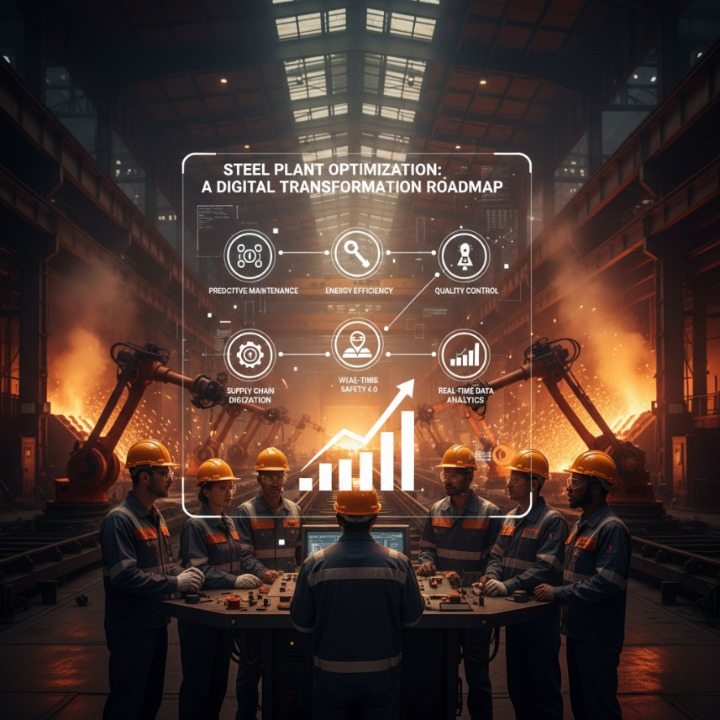
The first thing the consulting team did was diagnosing the process and fixing the issue by implementing a predictive maintenance system. It was not some high-tech expensive software—just practical monitoring:

  1. Equipment Monitoring: IoT sensors on our machines like furnace, rolling mill, and main motors tracking temperature, vibration, and power consumption
  2. Weekly Inspection: Created simple checklists for maintenance team to inspect equipment systematically
  3. Maintenance Scheduling: Planned maintenance during low-demand periods instead of random shutdowns
  4. Spare Parts Strategy: Analysed past failures and stocked critical spares

The Result: Within six months, unplanned downtime dropped by 32%. It was not 100% but it was lesser than before only in 6 months. It was a great achievement. Equipment that used to fail monthly now runs smoothly for entire quarters.

The ROI? Those ₹2 lakh investment on sensors reduced downtime that would have cost us ₹12 lakhs. In addition to this delivery time is also improved.

Problem 2: Process Optimization: StreamliningPlant Workflows

We’d been running our rolling mill the same way for 12 years. Same layout, same material handling process, same scheduling system. Thinking it is working properly.

But here’s what I didn’t see:

  • Raw materials being moved 8 different times before reaching the furnace
  • Workers walking excessive distances throughout the day
  • Work is distributed unevenly across stations as a result few remains idle
  • Work orders were hard to track due to inconsistency in recording
  • Setup times that ate into productive time

Why This Happens:

When you’re engaged in day-to-day operations, you can’t give time to the inefficiencies. It’s like being in a messy room for years—you are so used to it that you stop noticing the mess. We had gradually accepted work-arounds and inefficiencies as “just how we handle things.”

Process optimization isn’t about working harder. It’s about working smarter.

The consultants introduced me to “value stream mapping”—basically drawing out our entire production process step by step. When I saw it on paper, I was shocked at how convoluted it was.

Here’s what we changed:

  1. Redesign the layout: Rearranged machineries to minimize material movement
  2. Material Flow: Reduced handling movement from 8 moves to 3 moves—materials now flow logically through production
  3. Digital Work Orders: Simple app on tablets showing real-time job status
  4. Scheduling System: Proper sequencing to minimize changeovers and setup time
  5. Standard Operating Procedures: Documented standardized practices so everyone does things the optimal way

The Result: Material handling time reduced by 35%. We freed up 20% more floor. Setup times reduced to 28%.

Workers aren’t frustrated anymore. The process makes sense, and they can focus on quality work instead of fighting the system.

Problem 3: Driving Productivity through Workforce Training and Standard SOPs

I’ll be honest—I used to think my workers were the problem they were lacking skills. Production was slow, quality issues were common, nobody seemed to take ownership. I was frustrated.

The consultants helped me understand: my workers weren’t lazy or incompetent. They were working within a broken system:

  • No clarification regarding roles and responsibilities.
  • No standard procedures for doing things
  • Inadequate training for equipment and processes
  • Poor communication between shifts and departments
  • No organisational structure
  • No feedback—good or bad—on their performance
  • Safety concerns made them work slower and more cautiously

How can you expect great performance when people don’t know exactly what or how to do it optimally?

This wasn’t about pushing people harder—it was preparing them for success:

  1. Clear Role Definitions: Every position now is well defined. Everyone knows their responsibilities and standards
  2. Cross-Training: Workers trained on multiple machines so we have flexibility and they’re more valuable
  3. Daily Briefings: 15-minute morning meetings for discussing yesterday’s results, today’s plan, issues to address
  4. Performance Visibility: Dashboard showing real-time metrics—everyone knows how we’re doing
  5. Suggestion System: Workers can submit improvement ideas

The Result: Worker productivity increased 28%. But more importantly:

  • Safety incidents down 55%
  • Employee turnover dropped from 28% to 8% annually
  • Worker engagement surveys improved from 42% to 78%
  • Quality defects reduced 60%

Problem 4: Lean Manufacturing: Reducing Material Wastage in Steel Production

We were having 8-10% material wastage. Scrap steel, off-spec products, trim waste, rework. I thought this was industry standard. But when the consultants told me plants running at 3-4% wastage, I realized we were doing something wrong

Why This Happens:

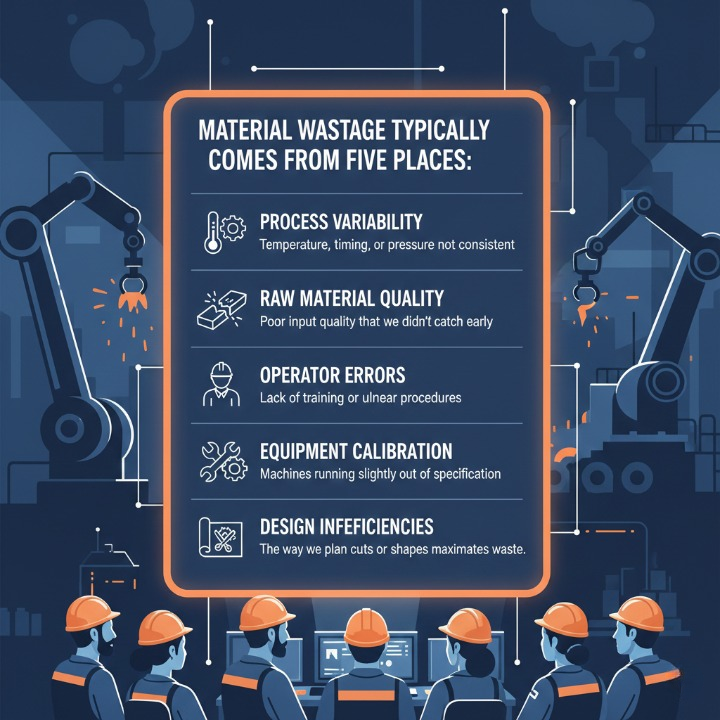
Material wastage typically comes from five places:

  1. Process variability: Temperature, timing, or pressure not consistent
  2. Raw material quality: Poor input quality that we was not noticeable earlier
  3. Operator errors: Lack of training or unclear procedures
  4. Equipment calibration: Machines running slightly out of specification
  5. Design inefficiencies: The way we plan cuts or shapes maximizes waste

We were experiencing all five, but didn’t have systems to address any of them.

This issue was resolved:

  1. Statistical Process Control: Started monitoring key parameters (temperature, pressure, timing) and set alert limits
  2. Raw Material Inspection: Implemented testing protocols before materials enter production
  3. Operator Training: Quality control training for every worker—they now check at each step
  4. Equipment Maintenance: Regular calibration schedules for all measuring and control equipment
  5. Waste Tracking: Started tracking exactly where scrap comes from to identify patterns

The big breakthrough? We discovered that 40% of our wastage came from inconsistent furnace temperatures. Fixed the control system, trained operators on temperature management, and scrap rates dropped.

Material wastage dropped from 9% to 4.2%. That’s a 53% reduction in scrap.

Financial impact? Saving ₹18 lakhs annually on materials alone. That money goes straight to the bottom line.

Problem 5: Energy Costs That Seemed Uncontrollable

Our monthly electricity bills were increasing. I thought, “That’s just the cost of running a steel plant.” We weren’t tracking which processes used how much energy, when consumption spiked, or what we could do to resolve it.

Energy is often the second-largest cost after raw materials, but it’s not monitored. We treat power as a fixed cost when it’s actually highly variable and controllable.

The industry consultants did an energy audit and found huge opportunities:

  • Energy Monitoring: Installed sub-meters on major equipment to see actual consumption
  • Peak Demand Management: Identified that we were running non-critical equipment during peak hours
  • Operational Changes: Rescheduled heavy processes to off-peak hours where possible
  • Equipment Upgrades: Replaced machines with high- efficiency versions, installed Variable Frequency Drives and improved furnace insulation.
  • Power Factor Correction: Installed capacitor banks to improve power factor and reduce penalties

The industry consultants also helped us negotiate a better power contract based on our actual consumption pattern. Energy cost per ton of steel produced decreased 18%. Annual savings: ₹9 lakhs.

Plus, the improved power factor reduced our peak demand charges by another ₹3 lakhs annually.

WhatsApp Image 2026-01-31 at 17.46.56
Navigating Personal Resistance to Begin

Getting Started: Overcoming My Own Resistance

I'll be honest—I avoided hiring consultants for a long time. Thinking that I have been handling this business from many years I can find solutions to the problems on my own. I had all the usual objections:

• "I've run this plant for years and know my business from depth. What can outsiders tell me?"

• "Consultants are expensive, who would pay for just an advice"

• "They'll create fancy reports and would just be more complicated"

• "My business is different; generic advice won't help"

But the productivity gap was huge. After analysing I come to know that we were operating at 60% of our production capacity, I realized the cost of NOT getting help was far higher than consulting fees.

I talked to many consulting firms. I chose D&V Business Consulting because:

• They have worked with many steel manufacturing companies for productivity improvement.

• Their aim was not limited to just recommendation but execution

• They understood Mumbai's specific challenges

• They offered solutions that were tailored for mid-sized MSMEs like us

We here to help you
Book Appointment

    How Consultants Fixed Our Steel Plant in 4 Phases

    The consultants performed the project in 4 Phases

    Phase 1: The Diagnostic (Weeks 1-4)

    What Happened:

    The productivity consulting team spent the first month understanding everything:

    • Analysed production data
    • Performed Gemba Walks to understand about the area
    • Interviewed workers at every level
    • Studied about equipment condition and maintenance logs
    • Reviewed our costs, quality metrics, and delivery performance
    • Benchmarked us against industry standards

    There were consultants observing, measuring, asking questions. My team was nervous at first—they didn’t know how to react.

    But the consultants were respectful and genuinely curious. They asked workers, “What are the difficulties you are facing? What would make your job easier?” They actually listened.

    The diagnostic report revealed our biggest problems. I assumed our old furnace was the main issue. Actually, it was:

    1. Scheduling inefficiencies creating unnecessary downtime
    2. Material handling bottlenecks
    3. Lack of preventive maintenance
    4. Poor communication between departments
    5. Inadequate operator training on key processes

    The furnace was fine—we just weren’t using it efficiently.

    Phase 2: Quick Wins (Weeks 5-8)

    Before bringing big changes, they identified “quick wins”— they implemented improvements that were immediate without major investments.

    What We Did:

    1. 5S Workplace Organization: Sorted and organized the entire shop floor
    2. Daily Production Meetings: Started 15-minute morning briefings
    3. Visual Management: Installed boards showing real-time performance
    4. Basic Maintenance: Implemented weekly inspection checklists
    5. Material Inspection: Created simple incoming material testing protocols

    Within 30 days, it was observed:

    • Shop floor looked professional
    • Communication improved dramatically
    • Small equipment issues caught early
    • Team was motivated

    This built momentum and trust in the process. The team saw that improvement was possible.

    Phase 3: Major Transformation (Months 3-9)

    What Happened:

    This was the heavy lifting—implementing the big changes:

    Process Redesign:

    • Completely reorganized production floor layout
    • Streamlined material flow
    • Renovated scheduling system
    • Redesigned quality control processes

    Technology Implementation:

    • IoT sensors on critical equipment
    • Digital production dashboards
    • Mobile maintenance app
    • Cloud-based inventory system

    Training Programs:

    • Equipment-specific certifications for operators
    • Quality control training for all workers
    • Digital systems adoption
    • Lean manufacturing principles

    This phase was challenging. Some workers resisted new methods. We faced temporary productivity dips during transitions.

    But the consultants deal with that very patiently. They trained our people, addressed concerns, adjusted approaches when needed. They weren’t just telling us what to do—they were working alongside us.

    The digital dashboards were transformative. I was able to monitor the real-time production status, identify bottlenecks as they happened, and make data-driven decisions instead of guessing.

    Phase 4: Sustaining Improvements (Months 10-12)

    What Happened:

    The final phase focused on making improvements permanent:

    • Created standard operating procedures for everything
    • Trained internal team to lead continuous improvement
    • Established performance review systems

    By month 12, my team was able to run improvement projects independently. The consultants had trained our supervisors in problem-solving methodologies, so we could continue optimizing without depending on external help.

    4 Costly Mistakes That Delay Steel Plant Improvement

    Mistake 1: Waiting Until Crisis

    I waited too long. The productivity losses I accepted for years cost far more than consulting ever would.

    If your plant shows warning signs (declining delivery performance, increasing downtime, rising costs, shrinking margins), act now. Early intervention is cheaper and more effective.

    Mistake 2: Expecting Instant Results

    Real transformation takes time:

    • Months 1-3: Foundation and quick wins
    • Months 4-6: Major changes (temporary dips possible)
    • Months 7-9: Systems stabilize
    • Months 10-12: Full benefits realized

    I got impatient at month 3. I’m glad I stayed the course.

    Mistake 3: Not Involving Your Team

    Initially, I didn’t explain why consultants were coming. This created fear and resistance.

    When I brought everyone into the conversation—explained the why, involved them in solutions, addressed their concerns—implementation became much smoother.

    Mistake 4: Focusing Only on Equipment

    I was obsessed with upgrading machinery. The real gains came from:

    • Better maintenance of existing equipment
    • Optimized processes and workflows
    • Improved scheduling and planning
    • Better-trained operators

    We achieved 30%+ productivity gains with minimal equipment investment.

    4 Costly Mistakes That Delay Steel Plant Improvement

    How to Choose the Right Consultant for Your Plant

    Based on my experience, here’s what matters:

    1. Steel Industry Experience

     Manufacturing consultants don’t understand steel. You need someone who:

    • Has worked with multiple steel plants
    • Understands your specific processes
    • Knows industry benchmarks
    • Understands your pain

    The industrial productivity consultants in India, I worked with had done 50+ steel plant projects. That expertise showed.

    1. Implementation Focus

    Anyone can diagnose problems, write reports and make fancy presentations. You need someone who:

    • Works with your team as a companion
    • Helps in implementation
    • Stays through the business transformation
    • Trains your people

    Look for partners, not advisors.

    1. Local Understanding

    Mumbai has unique challenges:

    • Power supply reliability
    • Monsoon logistics impacts
    • Local supplier ecosystems
    • State rules and regulations
    • Regional workforce dynamic

    Industry experts who understand these realities and the area provide better solutions.

    1. Results-Based Approach

    Good consultants are confident enough to:

    • Set clear, measurable targets
    • Add some value to your business
    • Track actual improvements
    • Be accountable for outcomes

    If they’re not willing to commit to measurable outcomes, be cautious.

    1. Appropriate Solutions for Your Scale

    We’re not a huge company like Tata Steel. We needed solutions appropriate for mid-sized MSMEs:

    • Affordable investments
    • Phased implementation matching cash flow
    • Technology that fits our capabilities
    • Realistic timelines

    Find a consultant who provide genuine solutions not expensive solutions in the name of best.

    Start Reducing Downtime and Improving Productivity Today

    Before hiring consultants, start doing:

    1. Start Tracking Downtime Properly Not just when machines stop, but why, for how long, and what it costs. Observe for one month to understand the patterns.
    2. Interact with Your Workers Ask: “What slows you down? What challenges are you facing you? What would make your job easier?”

    You’ll get a plenty of improvement ideas in the first conversation.

    1. Audit Your Spare Parts You probably have lakhs tied up in excess or wrong parts while have limited spare. Do ABC analysis: what’s critical vs. nice-to-have?

    This Month

    1. Implement 5S Sort, Set in Order, Shine, Standardize, Sustain. This simple methodology would typically improve productivity by 8-12%.
    2. Start Daily Production Meetings 15 minutes each morning in which discuss:
    • Yesterday’s performance vs. target
    • Today’s plan
    • Issues needing attention
    • Quick wins

    Stand-up meetings keep energy high and focus sharp.

    1. Value Stream Mapping Draw out every step from raw material to finished product. You can’t improve what you don’t understand.

    Visual mapping helps in knowing the improvement opportunities you didn’t see before.

    This Quarter

    1. Move from Reactive to Preventive Maintenance Create basic schedules for critical equipment. Weekly inspections, monthly preventive tasks, quarterly overhauls.

    This single change can reduce unplanned downtime by 20-30%.

    1. Invest in Training Even basic skills updates make a difference:
    • Equipment operation best practices
    • Quality control fundamentals
    • Safety procedures
    • Basic problem-solving

    Keep ₹3-5 lakhs aside for training. The productivity gains return this investment in months.

    1. Calculate Your OEE Overall Equipment Effectiveness = Availability × Performance × Quality

    This single metric tells you how efficiently you’re using equipment. Most steel plants are at 50-60% on India and globally it is 85%+.

    Every OEE point gained directly increases productivity.

    What Happens After You Fix Productivity Issues

    The formal consulting engagement ended at 12 months, but the improvements continue:

    Sustained Performance:

    • Maintaining 30%+ higher productivity
    • OEE stable at 80%
    • Finding incremental improvements quarterly
    • Our team runs projects independently

    Cultural Change:

    • Workers were more participative
    • Data-driven decisions are standard
    • Continuous improvement is embedded
    • Training new hires in these methods

    Business Impact:

    • Handling 15% more orders with same infrastructure
    • Customers confidence has now increased
    • Better margins opened door for strategic investments
    • Process Optimization helped in improving efficiency and maximized output.
    • Much less stress—systems handle problems I used to fight daily

    Ongoing Improvement

    We continue optimizing:

    • Quarterly performance reviews
    • Regular training refreshers
    • New technology exploration
    • Process refinement

    Is Hiring a Steel Plant Consultant Worth the Investment?

    From my experience, absolutely—if you are committed to the process.

    Consider:

    • Does productivity improvement matters to your plant?
    • What does unplanned downtime actually cost you?
    • How much are you losing?
    • What’s the cost of declining competitiveness?

    For us, the cost of inaction was far higher than the investment in improvement.

    What If You’re a Smaller Plant?

    We’re mid-sized with around 80 employees. I’ve talked to smaller plant owners with 30-50 employees, who’ve done similar transformations.

    Actually, smaller plants often see better results because:

    • Less organizational structure—changes happen faster
    • Every improvement has immediate visible impact
    • Tighter teams build stronger buy-in
    • Can’t afford to waste resources

    Many consultants offer scaled solutions for smaller operations—phased engagements that fit your budget and cash flow.

    Action Plan to Increase Steel Plant Profitability

    Why Mumbai Steel Plants Can't Afford to Ignore Productivity Losses

    The Indian steel industry is very competitive. Mumbai has high operating costs—labor, power, real estate, logistics. If you’re not constantly improving your operations, you’re falling behind.

    I wrote this because when I was researching about productivity improvement, most articles were too technical or too vague. I wanted real information:

    • Will this actually work?
    • What will it cost?
    • How long will it take?
    • What are the real challenges?

    From my experience, I can say that operational improvement really works. The productivity gains are real, measurable, and sustainable.

    But you need:

    • The right expertise
    • Proper roadmap and Realistic expectations
    • Willingness to change
    • Focus on systems, not blame
    • Willingness to invest your resources

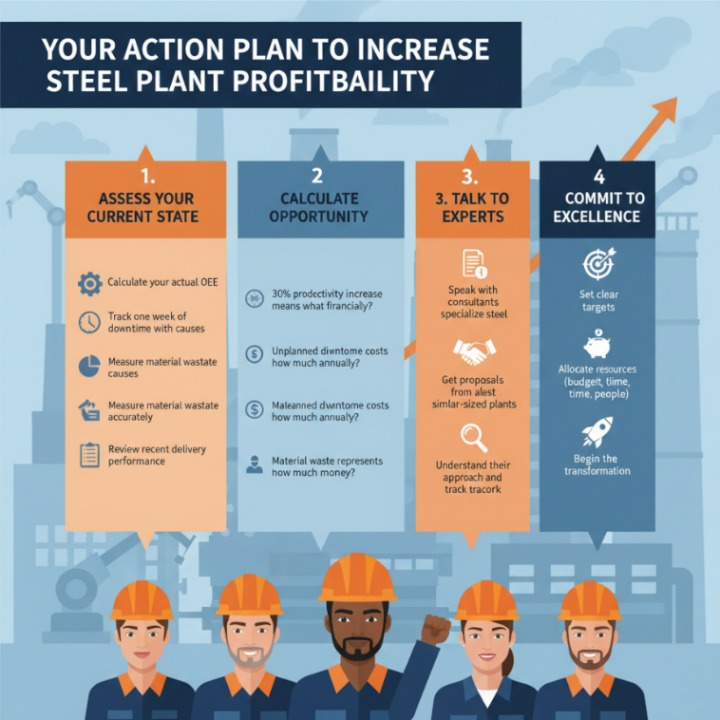
    Your Action Plan to Increase Steel Plant Profitability

    If your steel plant is struggling with productivity issues:

    1. Audit Your Efficiency
    • Calculate your actual OEE
    • Track one week of downtime with causes
    • Measure material wastage accurately
    • Review recent delivery performance
    1. Identify Financial Opportunities
    • 30% productivity increase means what financially?
    • Unplanned downtime costs how much annually?
    • Material waste represents how much money?
    1. Engage Specialized Consultants
    • Speak with consultants who specialize in steel
    • Get proposals from at least 3 firms
    • Check references from similar-sized plants
    • Understand their approach and track record
    1. Establish a Culture of Excellence
    • Set clear improvement targets
    • Allocate resources (budget, time, people)
    • Communicate vision to your team
    • Begin the business transformation

    How to Calculate OEE for your Steel Plant

    Most steel plant owners think that they are working efficiently until they calculate their Overall Equipment Effectiveness (OEE). OEE shows how much productive capacity you are actually losing due to downtime, slow cycle and quality defects. OEE was a new term for me also but after learning about this I tried to apply it to my plant.

    Here is the simple OEE calculator to understand where your steel plant stands as compared to the industrial benchmark. For Steel Industry the OEE benchmark is 85% or higher, know yours. 

    Get Expert Help to Solve Your Steel Plant Challenges

    If you want to explore how operational excellence consulting can help your steel plant, D&V Business Consulting specializes in process optimization for Mumbai and Maharashtra steel plants. They offer:

    • Free initial assessments
    • Steel industry expertise
    • Implementation-focused approach
    • Results-based engagement models
    • Scaled solutions for MSMEs

    The transformation is possible. Your productivity challenges are solvable. The question is: will you take the first step?

    Book your assessment with D&V Business Consulting’s for Business Growth Guaranteed Program

    FAQs
    Steel Plant Productivity & Operational Excellence
    What is the average material wastage in a Mumbai steel plant?

    Many plant owners assume 8–10% wastage is the industry standard. However, plants utilizing operational excellence strategies typically operate at much lower levels, around 3–4%.

    How much can operational excellence consulting improve steel plant productivity?

    Implementing Lean manufacturing and process optimization can lead to productivity gains of 30% or more.

    What are the main causes of material wastage in steel manufacturing?

    Wastage is typically generated from five areas: process variability, poor raw material quality, operator errors, equipment calibration issues, and design inefficiencies.

    How does unplanned downtime affect a steel plant's financial performance?

    Unplanned downtime creates a chain reaction including idle worker wages, wasted energy on restarts, late delivery penalties, and increased defects due to rushed production.

    Is predictive maintenance better than reactive maintenance for steel plants?

    Yes; while reactive maintenance only fixes machines after they break , predictive maintenance uses monitoring and data to catch warning signs early, significantly reducing unexpected shutdowns

    What is the typical OEE for steel plants in India?

    Most steel plants in India operate at an Overall Equipment Effectiveness (OEE) of 50–60%, whereas the global benchmark is often 85% or higher.

    How long does a full business transformation take for a manufacturing plant?

    A complete transformation generally takes minimum 12 months, moving through phases of diagnosis, quick wins, major system implementation, and finally, sustaining those improvements.

    Can small or mid-sized steel plants (MSMEs) benefit from consulting?

    Absolutely; smaller plants often see faster results because they have less organizational structure, allowing for quicker changes and strong team buy-in.

    How can steel plants reduce their monthly electricity and power costs?

    Plants can reduce energy costs by performing energy audits, managing peak demand, upgrading to high-efficiency motors, and improving furnace insulation.

    What should I look for when choosing an operational excellence consultant in Mumbai?

    Key factors include specific steel industry experience, a focus on implementation rather than just reports, and an understanding of local Mumbai challenges like monsoon logistics and power reliability.

    Related Posts